The project is only temporary, but it shows how the spaces streets take up might be better used for things besides cars.
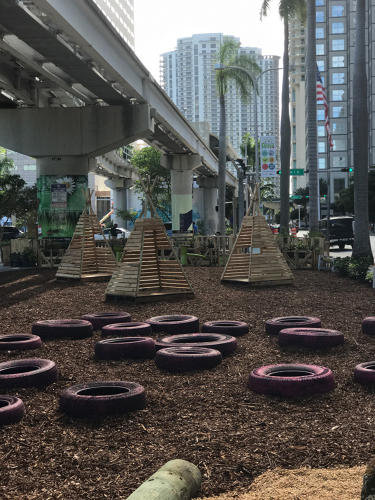
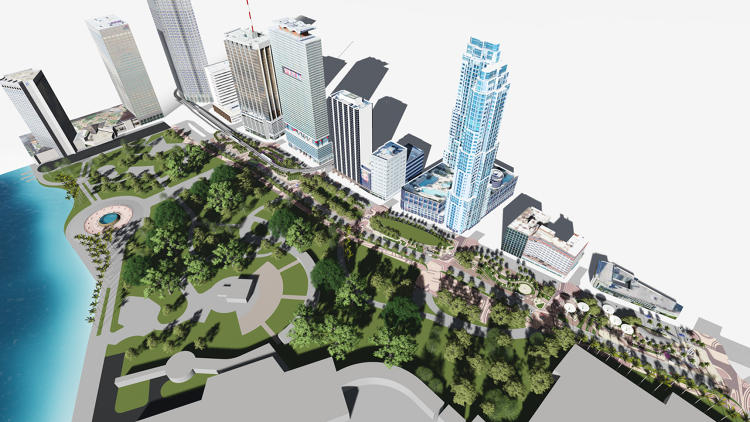
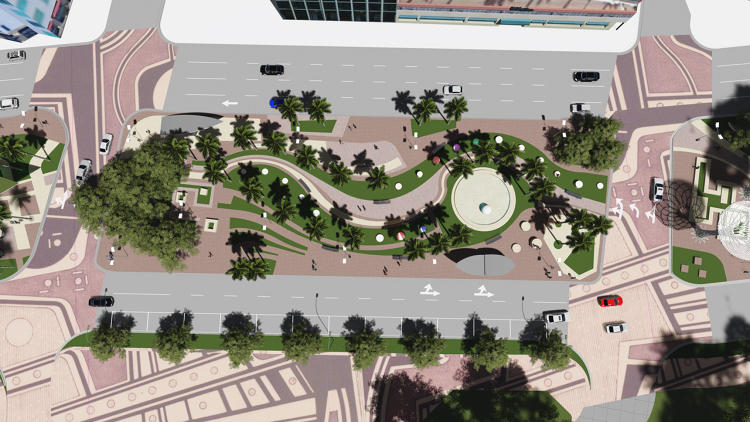
- 01 /07 The goal of the three-week experiment: to prove to residents in a car-centric city that it makes sense to permanently redesign Biscayne Boulevard.
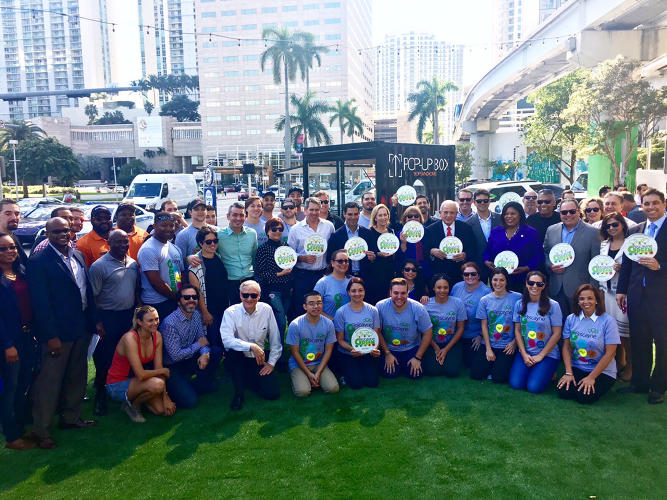
- 02 /07 The temporary intervention replaced three blocks of parking, covering parking spots with mulch, paint, and turf to turn it into a promenade.
- 03 /07 During the three-week experiment, two lanes of southbound traffic will temporarily replace some of that parking and serve as a dedicated bus lane.
- 04 /07 Over the past 15 years, the population in the downtown area has grown nearly 150%.
- 05 /07 Many of the new residents are millennials who value public space, but little public space exists.
- 06 /07 The city wants to build support for a much larger project called Biscayne Green.
- 07 /07 That would convert two lanes of traffic each way into bike lanes and transit-only lanes.
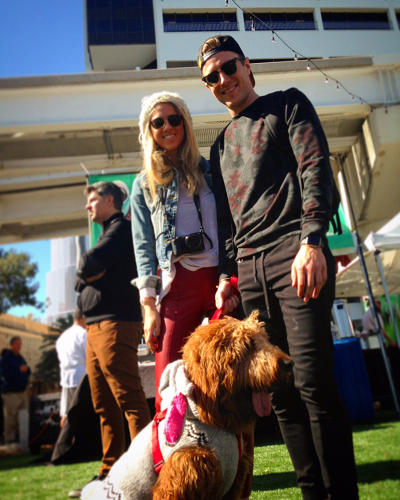
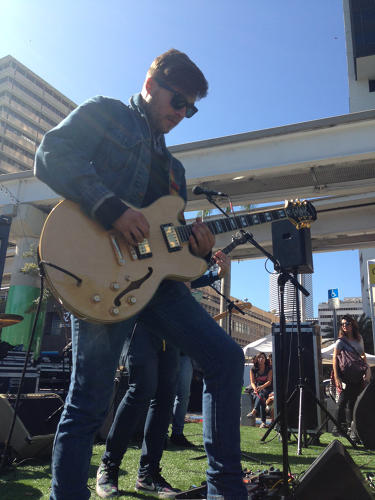
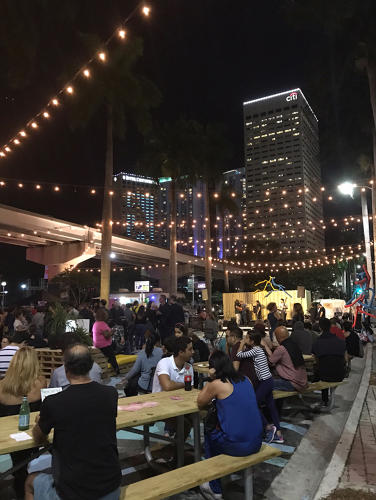
In the middle of a busy eight-lane street in downtown Miami, a new pop-up park is now temporarily home to a fire pit, exercise stations, a dog park, bike-share bikes, and movie screenings with free empanadas.
The goal of the three-week experiment: to prove to residents in a car-centric city that it makes sense to permanently redesign Biscayne Boulevard to become more pedestrian-friendly.
"I think that it's a much-needed change that people didn't know they needed," says Miami Downtown Development Authority chairman Ken Russell. "This goes against some of the traditional parts of the auto-centric mindset, and we're trying to shift that paradigm."

No comments:
Post a Comment