WWI 100th Anniversary: UK Taxpayers Still Paying £2bn War Loans to Secret Bankers - Yahoo News UK: "It's a century since the outbreak of the First World War but British taxpayers are still paying for their country's part in it – and a handful of banks is cashing in on hundreds of millions of pounds.
Every year £136m is shelled out in coupon payments to holders of the government debt – War Loans – used to fund the role of troops from the British Empire in WWI.
And the owners of 99% of the £1.94bn (€2.4bn, $3.26bn) WWI debt still around are a secret group of financial institutions."
'via Blog this'
Thursday, 14 August 2014

Wednesday, 13 August 2014
Drugs minister calls for legalising cannabis for medicinal use | Society | The Guardian
Drugs minister calls for legalising cannabis for medicinal use | Society | The Guardian:
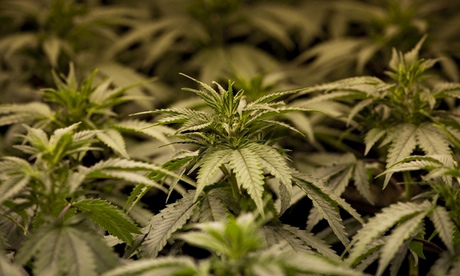
"Liberalised drug laws should be introduced to legalise the widespread use of cannabis to relieve symptoms of certain medical conditions, including the side effects of chemotherapy, the drugs minister Norman Baker will say. Amid concerns that "credible people" are having to break the law to secure the only substance that can help to relieve their condition, Baker is writing to the health secretary, Jeremy Hunt, to call for a review of the medicinal properties of cannabis. The intervention by the Liberal Democrat minister will highlight differences within the coalition as the Tories take a more cautious approach to drugs, including cannabis which is a class B drug. Nick Clegg, who criticised the Tories last year for refusing to look "imaginatively" at drug laws, announced earlier this month that the Lib Dem general election manifesto would include a pledge to end imprisonment for possession of drugs for personal use. In his letter to the health secretary, Baker will say that current laws for the use of cannabis are highly restrictive. The cannabis-based drug Sativex, which can be used to help relieve the symptoms of MS, can be prescribed by GPs, though it is highly expensive. Baker wants to liberalise the use of cannabis to allow it to be used to relieve the symptoms of conditions such as the side effects of chemotherapy and HIV/Aids treatments and Crohn's disease."
'via Blog this'
"Liberalised drug laws should be introduced to legalise the widespread use of cannabis to relieve symptoms of certain medical conditions, including the side effects of chemotherapy, the drugs minister Norman Baker will say. Amid concerns that "credible people" are having to break the law to secure the only substance that can help to relieve their condition, Baker is writing to the health secretary, Jeremy Hunt, to call for a review of the medicinal properties of cannabis. The intervention by the Liberal Democrat minister will highlight differences within the coalition as the Tories take a more cautious approach to drugs, including cannabis which is a class B drug. Nick Clegg, who criticised the Tories last year for refusing to look "imaginatively" at drug laws, announced earlier this month that the Lib Dem general election manifesto would include a pledge to end imprisonment for possession of drugs for personal use. In his letter to the health secretary, Baker will say that current laws for the use of cannabis are highly restrictive. The cannabis-based drug Sativex, which can be used to help relieve the symptoms of MS, can be prescribed by GPs, though it is highly expensive. Baker wants to liberalise the use of cannabis to allow it to be used to relieve the symptoms of conditions such as the side effects of chemotherapy and HIV/Aids treatments and Crohn's disease."
'via Blog this'
Vegetables to grow in winter: a how-to guide | Permaculture Magazine
Vegetables to grow in winter: a how-to guide | Permaculture Magazine:

"Vegetables to grow in winter: a how-to guide Janet Renouf-Miller | Monday, 1st November 2010 Janet Renouf-Miller explains how you can create a harvest of fresh, nutritious winter food throughout the cold months With the help of a bit of cover, and carefully selected varieties of seeds, it is possible to grow vegetables and herbs all year round in the United Kingdom, and presumably therefore in other temperate countries that have frosty winters. In my corner of Scotland, away from the sea and up in the hills, there is only one month of the year that can be guaranteed to be frost free and that is July. Most years we cannot grow courgettes or runner beans outside without cover. In our case, experimenting has paid off and we often have more produce in winter than in summer. Last year by the end of winter we were fed up with salad! Why grow vegetables in winter? There are a number of advantages to growing vegetables in winter: Mature overwintered veg keeps growing until December under cover, stands for the winter then comes away fast in February. They can be picked for much of the winter. There might be lean pickings in January but there is usually something – perhaps a bit of kale, land cress, claytonia, lamb's lettuce, herbs and carrots. Later autumn sowings will overwinter as seedlings that get going quickly again in February and are ready long before spring sowings. This eliminates the 'hungry gap' – that period of time when seeds have been sown in spring but little is ready to eat. Vitamins and minerals are harder to obtain in winter, especially vitamin C. Having something fresh from the garden can make a big difference. Fresh organic produce is more expensive in winter. Therefore winter veg saves you more money than summer veg. Rocket, radishes, salad leaves, parsley and mint are all expen-sive in winter yet easy to grow at home. The ground is as well growing something as sitting there empty. "
'via Blog this'
"Vegetables to grow in winter: a how-to guide Janet Renouf-Miller | Monday, 1st November 2010 Janet Renouf-Miller explains how you can create a harvest of fresh, nutritious winter food throughout the cold months With the help of a bit of cover, and carefully selected varieties of seeds, it is possible to grow vegetables and herbs all year round in the United Kingdom, and presumably therefore in other temperate countries that have frosty winters. In my corner of Scotland, away from the sea and up in the hills, there is only one month of the year that can be guaranteed to be frost free and that is July. Most years we cannot grow courgettes or runner beans outside without cover. In our case, experimenting has paid off and we often have more produce in winter than in summer. Last year by the end of winter we were fed up with salad! Why grow vegetables in winter? There are a number of advantages to growing vegetables in winter: Mature overwintered veg keeps growing until December under cover, stands for the winter then comes away fast in February. They can be picked for much of the winter. There might be lean pickings in January but there is usually something – perhaps a bit of kale, land cress, claytonia, lamb's lettuce, herbs and carrots. Later autumn sowings will overwinter as seedlings that get going quickly again in February and are ready long before spring sowings. This eliminates the 'hungry gap' – that period of time when seeds have been sown in spring but little is ready to eat. Vitamins and minerals are harder to obtain in winter, especially vitamin C. Having something fresh from the garden can make a big difference. Fresh organic produce is more expensive in winter. Therefore winter veg saves you more money than summer veg. Rocket, radishes, salad leaves, parsley and mint are all expen-sive in winter yet easy to grow at home. The ground is as well growing something as sitting there empty. "
'via Blog this'
Launch of Website for Community-led Database for Missing and Murdered Indigenous Women | Deep Green Resistance News Service
Launch of Website for Community-led Database for Missing and Murdered Indigenous Women | Deep Green Resistance News Service:

"Launch of Website for Community-led Database for Missing and Murdered Indigenous Women By No More Silence As Indigenous peoples, working for justice for #MMIW is a process that starts within our own communities. The launch of this website is one example of the resurgence of community documentation as justice. In April of 2013, No More Silence, Families of Sisters in Spirit and the Native Youth Sexual Health Network began what has become a long term vision for a community-led database documenting the violent deaths and disappearances of Indigenous women. It is our collective hope that the lives of Indigenous Two Spirit, lesbian, gay, bisexual, transgender, transsexual, queer, questioning, intersex, and asexual (LGBTTQQIA) will also be recognized as gender based violence also impacts these communities and is often invisibilized."
'via Blog this'
"Launch of Website for Community-led Database for Missing and Murdered Indigenous Women By No More Silence As Indigenous peoples, working for justice for #MMIW is a process that starts within our own communities. The launch of this website is one example of the resurgence of community documentation as justice. In April of 2013, No More Silence, Families of Sisters in Spirit and the Native Youth Sexual Health Network began what has become a long term vision for a community-led database documenting the violent deaths and disappearances of Indigenous women. It is our collective hope that the lives of Indigenous Two Spirit, lesbian, gay, bisexual, transgender, transsexual, queer, questioning, intersex, and asexual (LGBTTQQIA) will also be recognized as gender based violence also impacts these communities and is often invisibilized."
'via Blog this'
Deep Green Resistance

Deep Green Resistance: "Get Involved “A political resistance goes on day and night, under cover and over ground, where people can see it and people can’t. It is taught. It is encouraged. It is celebrated. It is smart. It is committed. And someday it will win.” ―Andrea Dworkin"
'via Blog this'
Fracking Success Shut Down US Climate Change Policy - Christopher Williams on Reality Asserts Itself (3/5)
Fracking Success Shut Down US Climate Change Policy - Christopher Williams on Reality Asserts Itself (3/5): "Fracking Success Shut Down US Climate Change Policy - Christopher Williams on Reality Asserts Itself (3/5)
Mr. Williams tells Paul Jay that the fabulous profits made from fracking oil and gas took climate change off Obama agenda, and while coal emissions may be down in the US, coal exports have grown exponentially - August 12, 2014"
'via Blog this'
'via Blog this'
Tuesday, 12 August 2014
Bacteria-powered electric bugs could monitor water quality in developing countries : TreeHugger

Bacteria-powered electric bugs could monitor water quality in developing countries : TreeHugger: "Access to clean drinking water is a crucial issue for many people living in developing countries. Testing water for pollution usually involves collecting samples and taking them back to a lab. More high tech solutions include mass spectrometry -- a very sensitive process that requires expensive specialist equipment -- to detect toxins in water supplies, but that can't be used for routine water monitoring and is too expensive and complex for using in developing areas. Looking to find a better solution, researchers at the University of Bath along with the Bristol Robotics Laboratory at the University of the West of England have designed an inexpensive sensor using 3D printing that is powered by bacteria and can be placed directly in rivers and lakes to continually monitor water quality."
'via Blog this'


Soaring domes built with bamboo, the new "green steel" : TreeHugger
Soaring domes built with bamboo, the new "green steel" : TreeHugger:

"We may have seen the rise and fall of bamboo clothing, but we are currently witnessing a renaissance of bamboo building in architecture. From swooping bridges to floating disaster-proof shelters, we've seen how bamboo exceeds expectations when it comes to strength, cost-effectiveness and beauty. Ho Chi Minh City, Vietnam-based firm Vo Trong Nghia Architects is one of these bamboo architecture pioneers, recently constructing a number of gorgeous projects that demonstrate the extensive capabilities of bamboo, which some have dubbed "vegetable steel.""
'via Blog this'
"We may have seen the rise and fall of bamboo clothing, but we are currently witnessing a renaissance of bamboo building in architecture. From swooping bridges to floating disaster-proof shelters, we've seen how bamboo exceeds expectations when it comes to strength, cost-effectiveness and beauty. Ho Chi Minh City, Vietnam-based firm Vo Trong Nghia Architects is one of these bamboo architecture pioneers, recently constructing a number of gorgeous projects that demonstrate the extensive capabilities of bamboo, which some have dubbed "vegetable steel.""
'via Blog this'
Find Locally Grown Food
Find Locally Grown Food: "The eatlocalgrown project was created to help you Find, Rate and Share Locally Grown Food! There are categories for Farms, Farmers Markets, Grocery Stores/Co-ops, Restaurants, Artisans and more.
This is a crowd sourced project"
'via Blog this'
'via Blog this'
Hungarian despotism: Europe must act | openDemocracy
Phoenix : My Hungarian activist friends have been warning us for the lst few years about the extremes of their Leader and government. A while ago they made it illegal to be homeless and have increasingly brought in more Draconian laws.
Hungarian despotism: Europe must act | openDemocracy: "Hungarian despotism: Europe must act LORENZO MARSILI 6 August 2014 Hungarian PM Viktor Orban has openly vowed to turn the country into an ‘illiberal state’. Europe cannot let this happen. Hungarian PM Viktor Orban. Flickr/EPP. Some rights reserved. “Hungary’s Mussolini Vows to Make the EU Member an Illiberal State”, titles Newsweek. Hungarian prime minister Viktor Orban has finally come in the open. At a recent rally of party supporters he has admitted that he is out to turn the country into an illiberal state. He pointed out that liberal western democracies cannot remain globally competitive, and that China, Russia, and Turkey should be taken as the example to follow. These worrying statements are, unfortunately, backed up by facts. They follow years of increasingly restrictive laws in Hungary, which have endangered the independence of the judiciary, the media, and civil society, and entrenched the power of the ruling party, Fidesz. In April 2011 a constitutional reform silenced the constitutional court, allowing the government to pass any legislation it sees fit. In the same year a draconian media reform placed public and private media under state tutelage, eventually leading to widespread manipulation in public broadcasting, direct censorship and closure of opposition media, and attempts to bankrupt international TV channel RLT for its criticism of the regime. As a result fear has returned to Hungarian society. Relatives and friends of opposition figures became unemployable, a number of NGOs receiving foreign aid were blacklisted, and international donors such as the Norwegian Civil Fund threatened with suspension of their operating license"
'via Blog this'
Hungarian despotism: Europe must act | openDemocracy: "Hungarian despotism: Europe must act LORENZO MARSILI 6 August 2014 Hungarian PM Viktor Orban has openly vowed to turn the country into an ‘illiberal state’. Europe cannot let this happen. Hungarian PM Viktor Orban. Flickr/EPP. Some rights reserved. “Hungary’s Mussolini Vows to Make the EU Member an Illiberal State”, titles Newsweek. Hungarian prime minister Viktor Orban has finally come in the open. At a recent rally of party supporters he has admitted that he is out to turn the country into an illiberal state. He pointed out that liberal western democracies cannot remain globally competitive, and that China, Russia, and Turkey should be taken as the example to follow. These worrying statements are, unfortunately, backed up by facts. They follow years of increasingly restrictive laws in Hungary, which have endangered the independence of the judiciary, the media, and civil society, and entrenched the power of the ruling party, Fidesz. In April 2011 a constitutional reform silenced the constitutional court, allowing the government to pass any legislation it sees fit. In the same year a draconian media reform placed public and private media under state tutelage, eventually leading to widespread manipulation in public broadcasting, direct censorship and closure of opposition media, and attempts to bankrupt international TV channel RLT for its criticism of the regime. As a result fear has returned to Hungarian society. Relatives and friends of opposition figures became unemployable, a number of NGOs receiving foreign aid were blacklisted, and international donors such as the Norwegian Civil Fund threatened with suspension of their operating license"
'via Blog this'
Monday, 11 August 2014
BBC News - Green MP: 'Government has something to hide' over fracking
BBC News - Green MP: 'Government has something to hide' over fracking: "
Media caption
Green MP: 'Government has something to hide' over fracking
11 August 2014 Last updated at 10:07 BST
A Green Party MP has accused the government of having "something to hide" after the publication of a partly redacted analysis of the potential effects of fracking for shale gas.
Speaking on the Today programme, Caroline Lucas said the report "would be comical if it wasn't so serious because there is just so much of it that has been blacked out".
"The only conclusion you can draw from looking at this report is that the government has something to hide and I think we need to know what it is," she added.
Key parts of an official analysis, examining how the controversial technique might affect rural areas, including the effect on house prices, were redacted before publication."
'via Blog this'
'via Blog this'
Central london squat history walk tomorrow meet 6pm in tolmers square off north gower st nw1
Central london squat history walk tomorrow meet 6pm in tolmers square off north gower st nw1
Sunday, 10 August 2014

Saturday, 9 August 2014
Undercurrents activist video a history http://www.undercurrents.org/about.html
1993
1993
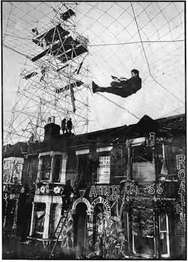
In September 1993, two disillusioned television producers and a group of activists came together to explore the potential of using domestic HI8 camcorders to bring about social and environmental change. Based in North London, we filmed and edited footage of the dramatic M11 link road protests. Under the name of Small World media, we gathered video footage from activists all over the UK and decided to create an alternative distribution views and perspectives rarely heard or seen on mainstream television- it would become known as Undercurrents.
In September 1993, two disillusioned television producers and a group of activists came together to explore the potential of using domestic HI8 camcorders to bring about social and environmental change. Based in North London, we filmed and edited footage of the dramatic M11 link road protests. Under the name of Small World media, we gathered video footage from activists all over the UK and decided to create an alternative distribution views and perspectives rarely heard or seen on mainstream television- it would become known as Undercurrents.
1994

1994
'Undercurrents the alternative news video issue 1' is released on VHS tape on April 1st. Most notable feature included the country's first video feature informing about the imminent introduction of the CJB.The first batch of 250 tapes run out in a matter of weeks and press reviews are very positive.
The Guardian tells readers that "Undercurrents shocks, informs and exposes."
We move into a resource centre in Archway in North London, sharing with other campaign groups. The Camcorder Action Network is set up to co-ordinate the increasing number of video activists getting in touch. Undercurrents 2 is released in December, with six first time video activists making their first campaign videos. Undercurrents wins the first of many international awards with first prize in the prestigious German OKOmedia festival.
'Undercurrents the alternative news video issue 1' is released on VHS tape on April 1st. Most notable feature included the country's first video feature informing about the imminent introduction of the CJB.The first batch of 250 tapes run out in a matter of weeks and press reviews are very positive.
The Guardian tells readers that "Undercurrents shocks, informs and exposes."
We move into a resource centre in Archway in North London, sharing with other campaign groups. The Camcorder Action Network is set up to co-ordinate the increasing number of video activists getting in touch. Undercurrents 2 is released in December, with six first time video activists making their first campaign videos. Undercurrents wins the first of many international awards with first prize in the prestigious German OKOmedia festival.
|
1995
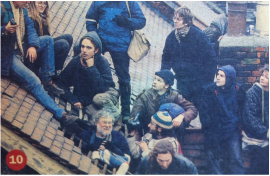
Filming on roof during M11 link protests
1995
To serve campaigns outside London much better, Undercurrents moves to Oxford and gains charitable status.The first Undercurrents stake holder meeting is held which brings a wide range of activists, media workers and visionaries together to plan the future of Undercurrents. A constant stream of volunteers join.
Undercurrents alternative news videos 3 and 4 are released. Time Out magazine hails Undercurrents as
"the news you don't see on the news".
Below you can watch how the BBC portrayed us in 1995 on The Late Show (BBC2)
Friday, 8 August 2014
End Arms trade to tyrants www.caat.org.uk
End "arms control by embarrassment"

As a Parliamentary Committee criticises UK arms exports, CAAT condemns 'arms control by embarrassment'. Why should it take a crisis before the government stops promoting and supporting arms sales to tyrants? Time and again we see the same tired excuses from government: we urgently need a fundamental revaluation of the UK's approach to arms sales.
Network www.caat.org.uk
Gathering of Minds 1 Year anniversary 6th Sept if you are interested in UFO's, Orbs, Earth Power sites, Interdimensional intelligence & communication, this is for you!!
If you are interested in UFO's, Orbs, Earth Power sites, Interdimensional intelligence & communication, this is for you!!
Tracey Ash will be at the Gathering of Minds 1 Year anniversary 6th Sept :)
Learn
- Why Earth Power sites and Ancient Monuments are key in transforming and rebooting our energy systems
- See actual film & photo evidence of Earth Power sites, Interdimensional realities & intelligence!
Also featuring Author of 'How to Manifest Money effortlessly' Dr Bruno Cignacco on
How to Gain a Prosperous Mindset
Also featuring Jody Shield with amazing Light Grids. A brilliant way for spiritual clearing for past & present lives.
Receive a free Meditation of the Heart to takeaway
We will also have Simone Vincenzi playing the didgeridoo
Drink after to celebrate our Birthday!
Share this with anyone that is interested in the above topics :) xx
Vigil Hinkley point nuclear power station full moon sat 9th aug
PLEASE FORWARD
Thursday, 7 August 2014
All the Torture’s that Fit to Call Torture Now Includes US Torture...
All the Torture’s that Fit to Call Torture Now Includes US Torture
On Monday in Salon, I said (in part),
[T]he recent history of America’s torture also damns the conventions of journalism that strive so hard for some kind of fake balance that still prefers a term that obscures the truth over one that accurately describes it.
Don’t get me wrong: We owe our knowledge of torture to some of the best journalists in the business, people like Jane Mayer and Dana Priest and Adam Goldman.
But as soon as coverage moved beyond that superb investigative work to coverage of the politics of torture — to the journalists who should hold those who implemented torture accountable — we remain mired in obscurantist language.
Which brings us to the torture report result the press might take most seriously.
According to McClatchy, in addition to misleading Congress, DOJ and the White House, the torture report concludes that the CIA also fed misleading information to the press: “[T]he news media were manipulated with leaks that tended to blunt criticism of the agency.”
Part of this manipulation (one the White House participated in) involved convincing the press to call torture something else, something it’s not. Enhanced interrogation. Harsh treatment.
Anything but torture.
For 10 years, journalists have willingly perpetuated this linguistic absurdity, even as more evidence came out proving the CIA used torture and not some fluffed up interrogation process, even as more and more neutral arbiters judged our torture torture.
The Senate Intelligence Committee has spent five years trying to understand and come to grips with the torture done in our name. Isn’t it time for journalists to do the same?
While I don’t flatter myself that my column was needed at this point — or even would have been influential –the NYT did just announce that it would henceforth call torture, including US torture, torture.
Over the past few months, reporters and editors of The Times have debated a subject that has come up regularly ever since the world learned of the C.I.A.’s brutal questioning of terrorism suspects: whether to call the practices torture.
[snip]
Given [changes that have taken place in recent years, including with the legal status of torture], reporters urged that The Times recalibrate its language. I agreed. So from now on, The Times will use the word “torture” to describe incidents in which we know for sure that interrogators inflicted pain on a prisoner in an effort to get information.
I may have more to say about the substance of the statement down the road. But for now two things are important: The most prestigious newspaper in the country has formally given up Bush’s euphemism. And this change came from the reporters.

Subscribe to:
Posts (Atom)